Friday, 3 May 2013

Bridges, Spice and All Things Nice!


Bridges, where would we be without them?

Over the years I have been over many bridges. Three bridges stand out and all are very different. The Golden Gate Bridge in San Francisco, USA. Sydney Harbour Bridge in Sydney, Australia and Campbell's Covered bridge in South Carolina, USA.


The Golden Gate Bridge is the youngest of the three. Building started in 1933 and was completed in 1937.

The suspension bridge is 8, 981 ft (2.7km's) in length and 90ft(27.4m) wide. 

Three men were responsible for the wonderful structure. Joseph Strauss, Irving Morrow and Charles Ellis. 

 A suspension, truss arch & truss causeways design made of steel.

The bridge-opening celebration began on May 27th 1937 and lasted for one week. The day before vehicle traffic was allowed, 200,000 people crossed by foot and roller skate!

Since its completion, the Golden Gate Bridge has been closed due to weather conditions only three times. December 1, 1951, because of gusts of 69 mph (111 km/h). December 23, 1982, because of winds of 70 mph (113 km/h) and December 3, 1983, because of wind gusts of 75 mph (121 km/h). An anemometer was placed midway between the two towers on the west side of the bridge and has been used to measure wind speeds. Another anemometer was placed on one of the towers.


The Sydney Harbour Bridge started construction in 1923 and was completed in 1932.

Under the directions of Dr J.J.C.Bradfield of the NSW Department of Public Works, the bridge was designed and built by British firm Dorman Long and Co Ltd of Middlesbrough.

The Bridge length is 1,149 m (3,770 ft) and the width 49 m (161 ft). 

A through arch design made of steel.

Something happened when the bridge was formally opened on March 19th,1932. There were many dignitaries and the Labor Premier of New South Wales, Jack Lang was to open the bridge by cutting a ribbon on the southern end. However, just as Lang was about to cut the ribbon, a man in military uniform rode up on a horse and slashed the ribbon with his sword, opening  the Sydney Harbour Bridge in the name of the people of New South Wales before the official ceremony began. He was promptly arrested, the ribbon was retied and Lang performed the official ceremony! 

The intruder was identified as Francis de Groot. He was convicted of offensive behaviour and fined £5 after a psychiatric test proved he was sane, but this verdict was reversed on appeal. De Groot then successfully sued the Commissioner of Police for wrongful arrest, and was awarded an undisclosed out of court settlement. De Groot was a member of a right-wing paramilitary group called the New Guard, opposed to Lang's leftist policies and resentful of the fact that a member of the Royal Family had not been asked to open the bridge. A similar ribbon-cutting ceremony on the bridge's northern side by North Sydney's mayor, Alderman Primrose, was carried out without incident.


Campbell's Covered Bridge is in Greenville County, South Carolina, USA.

The wooden, covered bridge was built in 1909 by, Charles Irwin Willis. The bridge was given it's name after Alexander Lafayette Campbell, who built and maintained the Campbell Corn Mill in the town of Gowensville. 

It was made in a relatively rare four-span Howe truss design. It features vertical iron rods and diagonal timbers that were made of pine.

The bridge is only 38 ft (12 m) long and 12 ft (3.7 m) wide.

In 1980 the bridge was closed off to traffic. The bridge itself is currently owned by the  Greenville County. The land surrounding the bridge was owned by Sylvia Pittman until 2005. Plans emerged for a park to be built around the bridge, and in mid 2005 Pittman sold 10 acres (40,000 m2) of surrounding land to the Greenville County, which paid for it. She said, "I had in mind to have this park preserved to allow everyone to enjoy it like we have." 

The initial cost of US $180,000 was covered through state and county grants.

One hundred years after it was built, it was added to the National Register of Historic Places on July 1, 2009 .

The next time you cross a bridge, think about it's history. The day I visited Sydney Harbour Bridge, I had afternoon tea at a little cafe near by. They served delicious Gingernut biscuits. From that day on I have loved them and here is my recipe for you to make them. 


Enjoy! 


Bernadette's Gingernut Biscuits/Cookies


Ingredients

340grams of plain flour
1 level teaspoon of bicarbonate of soda
2 teaspoons of ground ginger
100grams of butter
160grams of light brown sugar
4 tablespoons of golden syrup
1 large egg, beaten

Method

Pre-heat oven to 180°C/350°F
Line the baking trays with oven proof paper.
Put all the dry ingredients into a bowl. 
Place butter into dry ingredients and mix together with finger tips until it looks like bread crumbs. 
Stir in the sugar, then the syrup and the beaten egg. Bring it all together to form a smooth pastry dough.
On a lightly floured surface, roll out the dough to be about 8mm thick.
Using a small round cutter, cut out biscuits until all the biscuit dough is used up. 
Place on baking tray making sure enough room is left for slight expansion of the biscuits.
Before placing in oven to cook, chill on the baking tray for 20 minutes in fridge.
Cook for 10-15 minutes until golden brown. Put onto a rack to cool.


 

Monday, 22 April 2013

Wild About Mushies!!!!

April is the time of year in Western Australia when the first rains fall after a very hot Summer and then up pop the mushrooms!  

Mushrooms are so delicious, I have always eaten them. Today, you can buy so many types of mushrooms.

Growing up, we often went to my aunt and uncles dairy farm and picked mushrooms. My mother cooked them in a creamy buttery sauce, very delicious on toast!

Another type of fungi which has become popular over the years is the truffle!

A great place to go is Manjimup, 300 kilometers south of Perth, Western Australia. Manjimup is known for growing the black truffle. It's climate is similar to that of Perigord, France where they have harvested truffles over the years.

Italy is renowned for growing the white truffle. In fact, the largest known white truffle came from Pisa, Italy, weighing 1.5 kilograms.

Truffles grow under the ground near the roots of oak, hazelnut and other varieties of trees. Pigs were used to locate truffles. Unfortunately, pigs ate more than they gave, so dogs were taught to dig them up and bring them to the owner.

Truffles are very expensive. White truffles cost from about $1000 to over $2000 for half a kilo. Black truffles cost from $300 to over $600 for half a kilo. 

When people cook with truffles they normally shave them so they go further!

They are very strong in taste. To me, they are like heaven!


Fresh Wild Mushroom Linguine With Truffles 
Ingredients:

1 packet of uncooked linguine
500grams of fresh wild mushroom (chanterelles, shiitake, oyster, etc)
4 tablespoons of butter
2 garlic cloves, minced
4 tablespoons of shallots, chopped
Half a cup dry white wine
Half a cup chicken stock
1 cup cream

Nutmeg, freshly grated to taste
1 white onion, thinly sliced
2 teaspoons of fresh lemon juice
Salt and pepper
2 teaspoons of fresh thyme leaves
White truffle oil
Black truffle, shaved fresh at the time of serving

Method

Cook linguine pasta according to package directions. Drain and return to pan to keep warm. 

Clean mushrooms with a damp cloth and cut into thick slices. In a large frying pan, saute mushrooms in butter for 2 minutes. Then add minced garlic, sliced onion and shallots. Cook a further couple of minutes. 

Put in the white wine and simmer until wine is reduced by half. 
Add chicken stock, cream and nutmeg. Simmer until sauce thickens.
Remove from heat, add lemon juice, salt, and pepper. 

Lastly, add drained pasta to sauce and mix gently to coat the pasta.
If required, add more chicken broth if sauce seems too thick.

Place pasta on individual plates.
Spoon any mushrooms left in the pan over the top and sprinkle with fresh thyme leaves.
Drizzle white truffle oil over the top.
Using a truffle shaver, shave a few slivers of fresh truffle over each plate before serving.
 
Serves approximately 6 people.
I like to serve with crusty fresh white bread and a glass of white wine!

Enjoy!


Saturday, 23 March 2013

HMAS Sydney and a Fishy Treat


Western Australia is the largest state in Australia. One place I visited recently was Geraldton, 424 kilometres north of Perth. It is now a city and has grown in size and population. (Approx 26,000 people).

Over the years, I went there on a few camping trips. On the foreshore, there was a yellow submarine, unfortunately it has gone. It is my mission to find out what happened to it!


Western Australia has an amazing coastline and many ships have succumbed to the reefs over the years.

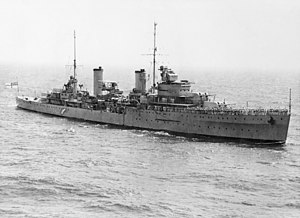
A two funnelled cruiser at sea. People are clustered on the forward deckOne story you may have heard was the finding of the HMAS Sydney and the Kormoran.  In 2008, David Mearns an American born, long time English resident, oceanic scientist and deep water search and recovery expert, led a team to find the Australian warship HMAS Sydney and the German Commerce Raider, Kormoran.

David Mearns first heard the story of the Sydney in 1996, and it left an indelible impression in his mind. One of the world′s foremost shipwreck hunters, David had successfully located dozens of wrecks in much deeper water. Hunting the Sydney, a challenge he accepted in 2002, proved his toughest quest yet. It tested his skills as detective, engineer, marine scientist and navigator. David′s quest, over six years, took him around the world. From war archives in Germany, to the homes of Kormoran survivors, then Fremantle, Western Australia and out into the Indian Ocean. He encountered conspiracy theories, clues, cyclones and a myriad of mechanical problems. On March 17th, 2008, he finally said with excitement, "HMAS Sydney found!"


The initial search for the ships began on 24th November, 1941 after Sydney failed to respond to radio messages. Royal Australian Air Force aircraft patrolled off the West Australian coast and all high powered radio stations in Australia were instructed to continuously broadcast to Sydney. After the British tanker, Trocas rescued survivors from the Kormoran at approximately 120 miles (192 km) west-north-west of  Carnarvon on 24th November, six nearby merchant ships were instructed to search for survivors. Four auxiliary Royal Australian Navy vessels were dispatched from Fremantle. 315 survivors from the Kormoran were rescued by 30th November. The only confirmed trace of Sydney found by searchers was a single empty lifeboat recovered by HMAS Heroes.

Finally, the relatives of the servicemen that served on the HMAS Sydney and the Kormoran have closure. For many years, the location of the vessels was unknown.

A memorial is now on top of Mount Scott in Geraldton. It is made of four major elements. Steel based on the ship's prow, a granite wall listing the ships company, a bronze statue of a woman looking out to sea waiting in vain for the HMAS Sydney to return, and a dome made of 645 stainless steel seagulls . 

This mystery of the sea brings my next recipe to you. Try this tasty dish.


Salmon, Spinach, Asparagus and Avocado Salad 

Ingredients

1 bunch of asparagus, ends trimmed
200g of roasted salmon fillet, flaked 
150g baby spinach leaves 
1 avocado, peeled, deseeded and flesh sliced 
1 tablespoon of olive oil 
2 tablespoons of lime juice 
2 teaspoons of brown sugar 
Salt and pepper to taste
Sesame seeds, to garnish

Method 

Blanch the asparagus in a pan of boiling water for 2 minutes. Drain, refresh under cold water, then drain once again. Pat dry.

For the dressing, whisk together the olive oil, lime juice and sugar in a bowl. Season with salt and pepper.

Place the asparagus, salmon, spinach and avocado in a large bowl.

Toss the dressing through the salad and sprinkle with sesame seeds.

Serve with fresh crusty white bread!


Saturday, 9 March 2013

From University to a Date!


The University of Western Australia is 100 years old this year. It opened its doors  in 1913 and 184 students attended. It was then located in Irwin Street, Perth.

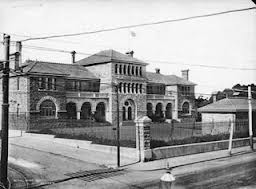
Old Irwin Street buildingIt had many buildings, one was transported from Coolgardie, 580 kilometers North-East of Perth. When the First World War started many students and staff volunteered for Military Service and the University's funding started to deplete. After World War One ended, the University quickly developed 
once more.

Sir John Winthrop HackettA bequest was left from Sir Winthrop Hackett's estate (Sir Winthrop Hackett was the owner and the Editor of a Western Australian major newspaper). Building began in 1929 on a 51-hectare site in Crawley, about five kilometres west of Perth. A Mediterranean style Winthrop Hall, clock tower, Hacket Hall and administration buildings were completed in 1932. Also with the funding, a Gothic style St Georges College was the University's first student residence. 

Winthrop Hall under construction in 1932The original buildings were also moved from Irwin Street to the new location at Crawley. One is still operational, the University's archives centre and cricket club pavilion.

During the Great Depression and World War 2 the University froze its development. One exception was the breakaway of Agriculture from Science to form a new faculty in 1936. Through ties with the then newly formed Institute of Agriculture, the Faculty of Agriculture was to become home to research laboratories for the Council for Scientific and Industrial Research for many years.
 
The faculty has developed today into the best of its kind in Australia and among the top 50 in the world.

After World War 2 the University's  student numbers grew to 1000. Then to 2000 by 1956 and almost doubled to 3,800 by the end of 1962, including 166 enrolments for master's degrees and 99 for doctorates. With larger student numbers came a dramatic increase in academic staff, leaping from 91 in 1953 to 247 in 1966.
 
Currently there are over 24,000 students enrolled.

The University is not only a place for study, I have attended some wonderful events there. In Summertime  they have outdoor movies, plays and a great theatre called the "Octagon Theatre" where I have seen many performances.

The gardens around the University are beautiful, with permission you can be married there!

 
DATE MELTAWAY

Ingredients for Pastry

2 tablespoons of butter
1 and a half cups of self raising flour
1 egg
2 tablespoons of sugar
2 tablespoons of milk


Ingredients for Date Mixture

                                          
1 cup of stones dates
Half a cup of sugar
1 cup of water

Method

 
Meltaway Pastry - Melt the butter and sugar, add the milk and well-beaten egg, mix well and add the flour. Roll out, and line a baking dish with pastry, keeping back half for a covering.

Date Mixture- In a saucepan place 1 cup of stoned dates, half a cup of sugar and 1 cup of water. Cook on low heat until mixture well combined and thick. Allow to cool, then spread over the meltaway pastry in the baking dish, and cover with another layer of the pastry. 


Brush over with a little milk, and bake until golden brown.


Saturday, 2 February 2013

A Pearl and Its Perils!

History is what made us and why we are here today. One place that stands out in history  and really makes you think is Pearl Harbour, Hawaii.

The harbour is still abuzz with military. What lays beneath the harbour is there for us to remember.

Today you can take a boat tour which gives the insight of what happened on the morning of December 7th 1941. The Japanese launched a surprise air attack on the U.S. Naval Base at Pearl Harbour. After just two hours of bombing, more than 2,400 Americans were dead, 21 ships had either been sunk or damaged, and more than 188 U.S. aircraft destroyed. This led to the involvement of United States in WW2.

One battleship, USS Arizona has oil leaking from the wreckage and is still seen rising to the surface of the water. This oil is sometimes referred to as "The tears of the  Arizona" or "black tears" Over 1000 lives on this Battleship alone were lost. Names on a marble wall in the memorial list those who were killed, there is a smaller plaque nearby with the names of survivors. The survivors that passed after this event gave their permission and had families permission to have their ashes to be placed  in a canister and a interred in the wreck of the USS Arizona. The canister was placed there by US Naval divers.

Near the USS Arizona Memorial is another battleship called, USS Missouri. It was moved from the West Coast of United States in 1999. One part this battleship's place in history is very important. It is where the surrender took place on it's decks from the Japanese to Douglas Mac Arthur and Admiral Chester Nimitz, ending WW2.

Strangely today, these battleships are close to each other - A beginning and a ending to ww2 for the Americans.

Today, every United States Navy, Coast Guard and Merchant Marine vessel entering Pearl Harbour participates in the tradition of "manning the rails." This is where personnel serving on these ships stand at attention at the ship's guard rails and salute the USS Arizona Memorial in solemn fashion as their ship slowly glides into port.

So if you are in Hawaii a visit to Pearl Harbour should be on your list of places to see. 

The day I visited Pearl Harbour, I stopped at a little place and remember eating a strange sandwich called "Ruben Sandwich." It was so yummy! Here is my own version, I hope you enjoy it. 


Bernadette's Ruben Sandwich

Ingredients

Per sandwich you will need
2  slices of Rye bread
1 teaspoon of butter
4 thin slices of corned beef
A quarter of a cup of sauerkraut (pickled cabbage)
2 slices of Swiss cheese
1 teaspoon of French mustard 


Method
 
Spread 2 slices of rye bread lightly with butter. This is for the outside of the sandwich for when cooking.
Spread the inside of one slice of rye bread with the mustard.
Top this with corned beef, sauerkraut and lastly, the Swiss cheese.
Place the other piece of bread on top and now toast in a grill or fry pan.
The bread should slightly brown and the middle will warm with the cheese melting.

Serve with potato chips and a pickle cucumber(dill pickle).


Saturday, 19 January 2013

A Tale of Two Mints!!

Perth Mint in Perth, Western Australia opened in 1899. Sir John Forrest (the first Premier of Western Australia) laid the foundation stone in 1896. The building was designed by George Temple Poole and the National Trust made it one of the first buildings to be entered on the State's heritage register.

The reason why it was built was due to the discovery of rich gold deposits in Coolgardie and Kalgoorlie. It was the third branch of Britain's Royal Mint - the others being the Sydney Mint and the Melbourne Mint.

People came from around Australia and the world in large numbers with their raw deposits of gold which was then melted and turned into gold coins. The Mint stopped making gold sovereigns when Britain abandoned the gold standard in 1931.  Nevertheless, the refinery remained busy as staff turned their skills to making fine gold bullion bars.  


In 1940, with Australia on a war footing, an urgent telegram arrived from the Commonwealth Treasury in Canberra: "Heavy demand for Australian coin and Melbourne Mint working full capacity.  Could you undertake minting copper coin?"
Hundreds of millions of Australian pennies and half pennies were produced by The Perth Mint between 1940 and 1964.  The Mint also fulfilled an order for 1.3 million shillings in 1946.  Its considerable output was boosted further when Australia introduced decimal currency in 1966.  It had produced a staggering 829 million 2 cent coins and 26 million
1 cent coins by 1973.

The Perth Mint remained under Britain's jurisdiction until 1 July 1970, when ownership transferred to the State Government of Western Australia.  


The Perth Mint is open 7 days a week and they do guided tours for a fee. On this tour you can see historic Perth mint coins, the worlds largest gold bar collection, gold being poured and Australia's largest nugget collection.  There is gift shop where you can buy coins, jewellery and souvenirs.  Definitely worth a visit.

The other mint was a recipe of mine which I know you will enjoy!

                                                   
                                                           Chocolate Mint Slice

Ingredients

Base 
One and a half cups self raising flour 
2 tbsp cocoa 
1 cup coconut 
Half a cup brown sugar 
125g unsalted butter, melted
 
Filling 
30g copha, melted
2 cups icing sugar 
2 tbsp milk 
Half teaspoon of peppermint essence
 
Chocolate layer
125g dark chocolate
 30g unsalted butter


Method
 
Preheat oven to 180°C. Butter a 16cm x 26cm x 3cm slice tray and line with baking paper.

Combine flour, cocoa, coconut and brown sugar in a bowl, stir in melted butter and mix until well combined. Press mixture into slice tray and bake for 10-15 minutes until slightly brown. Remove from oven and cool slightly.

To make filling, place icing sugar in a small bowl, stir in melted copha, milk and peppermint essence. Spread filling over warm base. Place tray in fridge for about 30 minutes until filling is cold.

To make the topping, melt butter and chocolate together, stir until smooth. Spread chocolate over peppermint filling.

Leave at room temperature to set and then slice into squares. I usually slice through the chocolate layer first, then go back and cut right through the base.